

The Ultimate Guide to Spinal Endoscopic Surgery: Evolution, Applications, and Herniated Disc Treatment
What is Spinal Endoscopic Surgery?
"Really? You can perform spine surgery with an endoscope?" This is the common surprise many patients express upon first hearing about this procedure. In fact, spinal endoscopic surgery is one of the most rapidly developing minimally invasive techniques in the surgical field over the last decade.
The application of endoscopes in surgery is not new. Laparoscopic surgery gained worldwide popularity as early as the 1980s, replacing many traditional open procedures. However, endoscopic techniques in spine surgery faced delays in widespread adoption due to limitations in instruments, optics, and surgical manipulation.
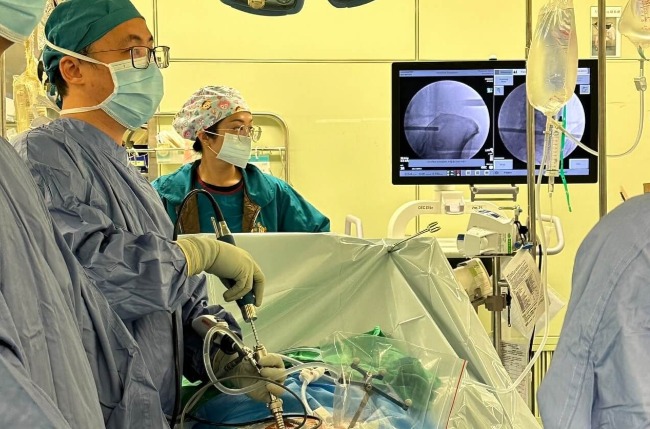
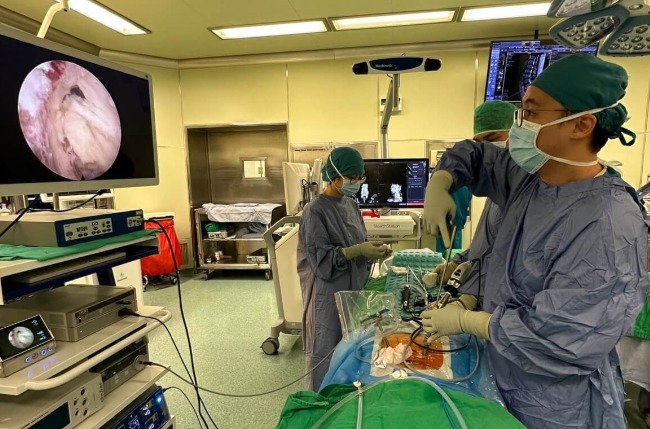
It is only in the last decade, with advancements in high-definition digital optical systems, more compact bone-drilling tools, and real-time intraoperative imaging navigation technology, that spinal endoscopy has truly overcome these bottlenecks. Today, surgeons need only make a small incision of about 0.8–1 cm in the skin to insert a slender endoscope and surgical instruments directly into the affected area. This allows for precise treatment of issues such as herniated discs, spinal stenosis, or nerve compression from bone spurs.
Compared to traditional open surgery, endoscopic surgery offers patients significant benefits: minimal trauma, faster recovery, and less pain. Many patients can even undergo the procedure under local anesthesia, walk on the same day or the next, and be discharged home the following day. This is precisely why it has quickly become a focal point in spinal surgery.
Compared to traditional open surgery, endoscopic surgery offers patients significant benefits: minimal trauma, faster recovery, and less pain. Many patients can even undergo the procedure under local anesthesia, walk on the same day or the next, and be discharged home the following day. This is precisely why it has quickly become a focal point in spinal surgery.
Less Than 1 cm Incision: How Navigation-Guided Endoscopic Surgery Achieves Ultra-Minimally Invasive Precision to Relieve Nerve Compression
Suffering from foot numbness or sciatic pain so severe it hampers every step, yet enduring it out of fear of surgery?
For clear cases of herniated discs or spinal stenosis, there is now an advanced option with extremely minimal trauma: Spinal Endoscopic Surgery. Through a tiny incision of only 0.8 cm, surgeons insert a high-definition endoscope and specialized instruments to directly remove the lesion compressing the nerve. The core goal of this technology is to achieve the fastest symptom relief and functional recovery with the smallest physical cost, making it particularly suitable for active patients eager to return to their daily lives.
Why is Endoscopy Synonymous with "Ultra-Minimally Invasive"?
1."Zero" Muscle Cutting:
The working channel is established through natural muscle planes, avoiding cutting or stripping the important core back muscles and ligaments. This fundamentally reduces postoperative pain and muscle weakness.
2."Extremely" Clear Visualization:
The endoscope provides high-definition digital images magnified up to 64 times, revealing nerve roots, blood vessels, and disc protrusions in minute detail. This allows decompression surgery to be performed with ultra-high safety.
3.Precise "Targeted" Decompression:
Using micro-drills and graspers, surgeons reach and remove the exact compression point, much like precision bomb disposal. This minimizes disturbance to surrounding normal bone and soft tissue.
The Evolution of Spine Surgery Techniques: From Traditional to Endoscopic
- Open Traditional Surgery: Large Incision, Significant Disruption
Traditional open spine surgery requires a 10–15 cm incision. Surgeons must cut through skin and muscle, and remove parts of the lamina and ligaments to access the spinal canal and treat the lesion. Its advantages are a clear field of view and thorough decompression, but the costs are significant blood loss, long recovery times, severe postoperative pain, and potential risks of muscle atrophy and chronic back pain.
- Microsurgery: The Transitional Era
From the 1990s to early 2000s, microscope-assisted spine surgery emerged. Using a microscope to magnify the surgical field, the incision size was reduced to 3–5 cm, representing a transition between traditional and minimally invasive techniques. However, microsurgery still requires muscle tissue dissection, and for multi-level or complex cases, the degree of trauma remains considerable.
- Endoscopic Surgery: The True Arrival of the Minimally Invasive Era
After 2000, advancements in endoscopic optics and bone-drilling instruments allowed surgeons to perform decompression and discectomy through a 0.8–1 cm channel. Post-2010, with the integration of real-time intraoperative navigation and 4K imaging, the safety, precision, and range of indications for spinal endoscopic surgery have improved dramatically!
Today, endoscopy is no longer just a tool for simply "removing a disc." It is widely applicable for spinal stenosis, degenerative spondylolisthesis, revision surgeries, and can even be combined with fusion techniques, becoming a new-generation standard therapy.
Spinal Endoscopy vs. Traditional Open Surgery: Key Comparison
| Item | Traditional Open Surgery | Spinal Endoscopic Surgery |
| Incision Length | Approx. 10–15 cm | Approx. 0.8–1 cm |
| Muscle Disruption | Significant muscle/ligament stripping | Almost no tissue destruction |
| Blood Loss | Higher | Minimal |
| Postoperative Pain | Significant | Milder |
| Recovery Time | Weeks to months | Within days to a week |
| Hospital Stay | About one week | Same-day or next-day discharge |
| Infection Risk | Relatively higher | Lower |
| Range of Indications | Broad range of spinal diseases | Most common indications |
Understanding Endoscopic Spine Techniques: Single-Portal, Dual-Portal, and Fusion-Assisted
- Understanding Endoscopic Spine Techniques: Single-Portal, Dual-Portal, and Fusion-Assisted
The single-portal approach is currently the most common method. The surgeon performs both visualization and manipulation through one slender channel, such as removing a herniated disc or bone spur. Its advantages are an extremely small wound, minimal bleeding, and low pain. Patients can usually be discharged the same or next day. However, due to the limited visual field and operating space, it places very high demands on the surgeon's hand-eye coordination and accumulated experience.
- Dual-Portal Endoscopy: Suitable for Revision Surgery
The dual-portal approach separates the "observation" and "manipulation" channels. This allows the surgeon to perform multiple tasks like bone drilling, irrigation, and decompression under a broader field of view. This makes dual-portal endoscopy particularly suitable for complex pathologies, spinal stenosis, or revision surgeries. However, this approach also involves higher costs for consumables and instruments and has a steeper learning curve.
- Fusion-Assisted Endoscopy: Combining Stability and Decompression
For patients with spinal instability or degenerative spondylolisthesis, decompression alone is insufficient. Fusion-assisted endoscopic surgery involves implanting spinal cages and pedicle screw systems through a minimally invasive channel after decompression to restore spinal stability. This technique balances minimal invasiveness with long-term structural support, making it especially suitable for younger patients or those needing to bear weight for sports. However, its technical difficulty, cost, and operative time are also relatively higher.
What Conditions Can Spinal Endoscopy Treat?
In the past, endoscopic surgery was limited to intradiscal decompression, often unable to completely remove herniated fragments, leading to suboptimal success and satisfaction rates. However, with today's high-resolution imaging and bone-drilling instruments, spinal endoscopy has significantly expanded its indications, including:
1. Herniated Disc:
Direct removal of the disc or bone spur compressing the nerve.
2. Spinal Stenosis:
Removal of thickened ligaments or bone spurs to widen the neural canal.
3. Mild Spondylolisthesis in cases where spinal structure remains stable.
4. Revision Surgery:
For postoperative recurrences or complex cases, endoscopy offers a more refined revision pathway.
Advantages of Spinal Endoscopy
According to multiple clinical studies [Ahn, 2016; Wang, 2013; Hsu, 2013; Wang, 2011], the main advantages of endoscopic surgery are:
1. Minimal Trauma:
Incision is only 0.8–1 cm, with almost no damage to muscles and ligaments.
2. Fast Recovery
Most patients can walk the same or next day, hospital stays are shorter, and they return to work faster.
3.Less Postoperative Pain:
Significant reduction in back pain and lower need for pain medication.
4. Feasibility Under Local Anesthesia:
Beneficial for elderly patients or those with anesthesia risks.
5. High Magnification:
Magnified intraoperative visuals allow clear identification of nerves and blood vessels, reducing the risk of injury.
Challenges and Disadvantages of Spinal Endoscopy
1.Limited Indications:
Endoscopy is primarily for "decompression" and cannot yet replace surgeries requiring extensive fusion or correction of severe spinal deformities.
2.Steep Learning Curve:
According to clinical literature, surgeons need to complete over 60 cases to cross the proficiency threshold, higher than the 30-case standard for traditional surgery.
3.Limited Field of View:
Bleeding or high water pressure can obscure vision, potentially requiring conversion to another surgical method.
4. Higher Cost:
Advanced consumables and navigation systems are not fully covered by health insurance in many regions, often requiring out-of-pocket payment.
Spinal Endoscopy FAQ
Q: Who is a suitable candidate for spinal endoscopic surgery?
It is suitable for patients assessed by a surgeon as having conditions primarily caused by nerve compression, such as herniated discs, spinal stenosis, or mild stable spondylolisthesis. These patients benefit from a small incision and fast recovery. The procedure can even be performed under local anesthesia. It is generally not suitable for complex multi-level cases or unstable spondylolisthesis. The treating surgeon will determine the most appropriate surgical method based on imaging, clinical evaluation, and disease severity.
Q: What is the typical recovery period after surgery?
Most patients can walk on the same day or the next, with hospital stays typically less than 2 days. Daily activities can usually be resumed within about a week. However, complete recovery of core muscle function and lumbar stability may take 4–6 weeks. Overall, compared to traditional open surgery, recovery time is significantly shorter.
Q: What are the potential complications? Are the risks high?
Possible complications include nerve injury, infection, or surgical failure requiring re-operation. However, due to the minimal surgical trauma and the support of intraoperative imaging and navigation systems, the complication rate is very low compared to open surgery. Loss of visual orientation and bleeding are the most technically challenging issues during execution.
Q: What's the difference between single-portal and dual-portal?
In single-portal, visualization and operation share one channel, making it streamlined but with a more limited field of view. Dual-portal separates the visual and instrument channels, offering more flexible manipulation, a better field of view, higher clarity, and greater ability to handle slightly more complex lesions. However, dual-portal has higher costs and a steeper technical threshold, recommended to be performed by experienced surgeons. Overall, the dual-portal approach enhances surgical safety and adaptability.
Q: Is the surgery expensive? Is it covered by insurance or national health insurance?
Spinal endoscopic surgery requires advanced imaging guidance, specialized consumables, and equipment, making its cost higher than traditional methods. Currently, it is largely a self-pay item in many regions, with limited coverage from national health insurance. Typically, anesthesia, hospitalization, and basic surgical fees may be partially covered, but patients often need to bear additional costs for specific medical materials and specialized techniques. The surgeon will recommend the most suitable medical materials based on the patient's condition, but the final decision rests with the patient.
Expert Perspective and Future Outlook
International clinical literature has shown that endoscopic surgery offers faster recovery, less pain, and fewer complications compared to traditional surgery, gradually becoming mainstream. However, its widespread adoption is still limited by factors like surgeon training, equipment investment, and patient financial burden.
In the future, spinal endoscopic surgery will integrate:
-
Computer Navigation and Robotic Assistance: To enhance surgical precision.
-
4D Real-Time Imaging: Allowing surgeons to grasp bone and nerve structures in real-time.
-
New Instruments for Endoscopic Fusion: Enabling complex cases to achieve both decompression and stability.
The development of spinal endoscopy is rewriting the history of surgical medicine, offering more hope for "small incisions, big changes" for spine patients.
If you have a clear diagnosis of nerve compression and desire a surgical solution with minimal trauma and the fastest recovery, spinal endoscopic surgery is worth your in-depth consideration. Welcome to schedule an outpatient evaluation with the [Dr. Chien-Chun Chang Minimally Invasive Spine & Joint Team]. Let us use precise imaging and clinical judgment to determine if this advanced ultra-minimally invasive technology is the best path for you to regain mobility and freedom.
Literature Review
1. Comparison of Outcomes of Percutaneous Endoscopic Lumbar Discectomy and Open Lumbar Microdiscectomy for Young Adults: A Retrospective Matched Cohort Study. Ahn SS 1 , Kim SH 2 , Kim DW 2 , Lee BH 3 . World Neurosurg. 2016 Feb;86:250-8. Epub 2015 Sep 25.
2. Learning curve for percutaneous endoscopic lumbar discectomy depending on the surgeon's training level of minimally invasive spine surgery. Wang H 1 , Huang B , Li C , Zhang Z , Wang J , Zheng W , Zhou Y . Clin Neurol Neurosurg. 2013 Oct;115(10):1987-91.
3. Learning curve of full-endoscopic lumbar discectomy . Hsu HT 1 , Chang SJ , Yang SS , Chai CL . Eur Spine J. 2013 Apr;22(4):727-33.
4. An evaluation of the learning curve for a complex surgical technique: the full endoscopic interlaminar approach for lumbar disc herniations. Wang B 1 , Lü G , Patel AA , Ren P , Cheng I . Spine J. Spine J. 2011 Feb;11(2):122-30.