

What is Computer-Navigated Surgery? How Does It Improve the Success Rate and Safety of Orthopedic Surgery?
【Article Summary】
For patients facing spine surgery, "nerve injury" and "risk of paralysis" are the greatest fears. This article provides an in-depth analysis of how computer navigation systems combined with intraoperative O-arm real-time 3D imaging can raise surgical accuracy to over 98%.
-
Technical Advantages: Digital 3D real-time positioning controls screw placement error to within 0.1 cm, effectively avoiding critical nerves and blood vessels.
-
Minimally Invasive Benefits: Smaller incisions, reduced pain, lower intraoperative radiation exposure, and the ability to get out of bed within 1–2 days after surgery.
-
Suitable Candidates: Particularly recommended for patients with spinal deformity, revision surgery, or those with extremely high demands for surgical safety.
-
Key Conclusion: Computer navigation does not replace the surgeon—it gives the surgeon "X-ray vision," transforming spine surgery from an experience-based practice into data-driven precision medicine.
Why Does Spine Surgery Need "Navigation"? [1]
The spine contains the central nervous system (spinal cord) and a dense network of peripheral nerve roots. It is flanked by major blood vessels (such as the carotid artery and aorta), and the surgical space within the spine is extremely narrow. When performing screw placement or nerve decompression, the safe margin is often only 0.1–0.2 cm. Even a slight deviation in screw trajectory can breach the pedicle, potentially causing permanent nerve injury or major hemorrhage.
The computer navigation system serves as a crucial tool to assist surgeons in positioning, enabling precise spinal procedures while reducing surgical risks and complications.
Limitations of Traditional C-arm X-ray Machines
In the past, surgeons used mobile X-ray machines (C-arm) for intraoperative localization. However, the C-arm only provides 2D planar images. The surgeon must mentally convert these 2D images into a 3D structure to perform the surgery, which introduces a risk of cognitive error. In addition, to repeatedly confirm positioning, both the surgeon and the patient are often exposed to high doses of radiation during the procedure.
The New Definition of Computer Navigation: A "Spinal GPS" Combined with O-arm 3D Imaging
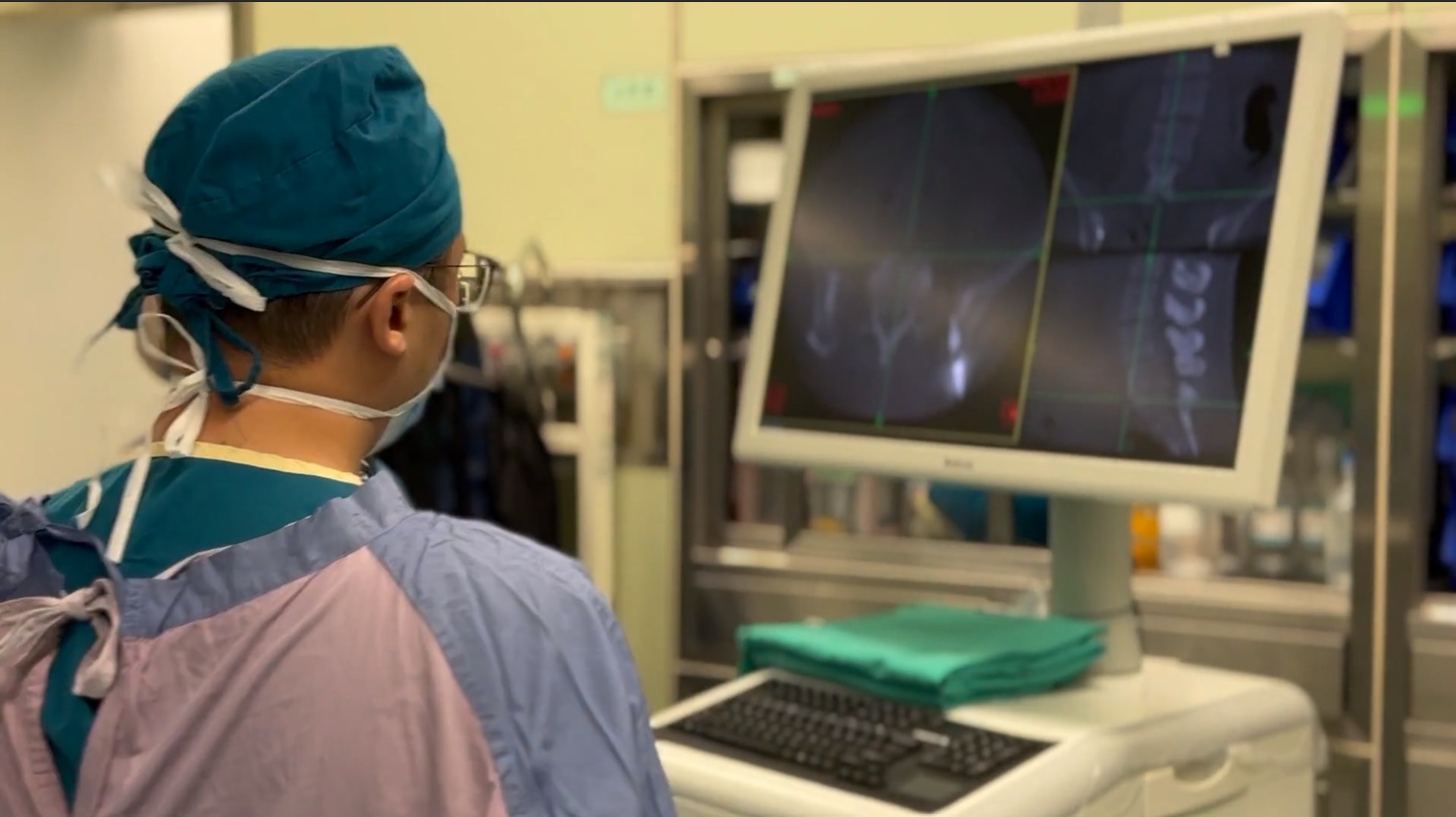
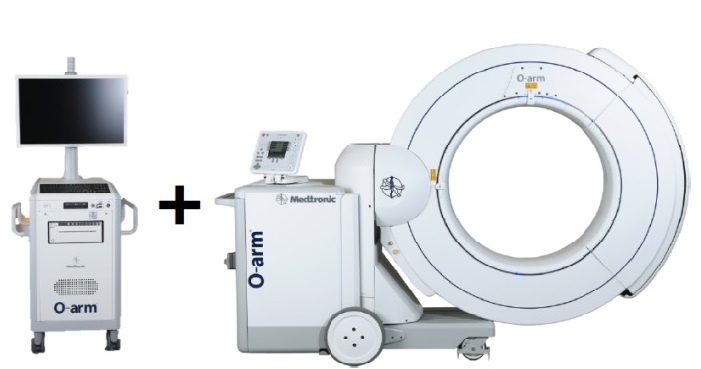
The key to the new generation of computer navigation systems lies in the deep integration of the O-arm intraoperative real-time 3D imaging system with digital navigation technology. The O-arm transforms the operating room into a 3D imaging studio. It performs a 360-degree scan around the patient, digitally reconstructing the patient's spinal anatomy in real time and transmitting it to the navigation console.
On the screen, the surgeon can see the real-time position of surgical instruments relative to nerves and blood vessels—just like using a satellite navigation system while driving, allowing the surgeon to anticipate the pathway and avoid obstacles.
Four Major Advantages of Computer Navigation in Minimally Invasive Spine Surgery
The introduction of computer navigation technology has elevated spine surgery from an "experience-based science" to a "data-driven science."
1. Ultimate Precision: Controlling Error to Within 0.1 cm [2] [3] [4] [5]
The misplacement rate for traditional freehand screw placement is approximately 10%–15%. With the introduction of computer navigation, screw placement accuracy can be raised to over 98% , with errors controlled to within millimeters—greatly reducing the risk of nerve injury and paralysis during spine surgery.
2. Smaller Surgical Incisions: Reducing Muscle Damage [6]
In traditional minimally invasive surgery, a certain degree of muscle dissection is sometimes required to visualize anatomical structures clearly. With navigation, the surgeon can guide instruments directly to the lesion through a tiny skin incision, reducing tissue disruption and significantly decreasing postoperative pain.
3. Real-Time Monitoring and Feedback: Lowering the Risk of Revision Surgery [5]
Before closing the wound, the navigation system can perform another O-arm 3D scan to confirm whether decompression is complete and whether implant positioning is optimal. This allows for immediate correction of potential issues, preventing patients from needing a second revision surgery due to improper screw placement or inadequate decompression.
4. Enhanced Radiation Protection: Protecting Patients and the Medical Team [2]
Because the navigation system can perform real-time tracking once the map is established, there is no need to repeatedly activate the X-ray machine for localization during surgery. This significantly reduces ionizing radiation exposure for both patients and medical staff.
Computer-Navigated Surgery vs. Traditional Surgery
|
Comparison Item |
(2D)Traditional Surgery (2D) |
Computer-Navigated Surgery |
|
Screw Placement Accuracy |
90%Approximately 85%–90% |
> 98% (millimeter-level error) |
|
Imaging Dimension |
2D planar projection |
3D real-time stereoscopic imaging |
|
Risk of Nerve Injury |
Higher (dependent on surgeon's tactile feel) |
Extremely low (real-time warning alerts) |
|
Intraoperative Radiation Exposure |
High (requires repeated X-ray exposure for localization) |
Low (navigation possible after a single scan) |
|
Surgical Incision Size |
May require extension or wider dissection as needed |
True minimally invasive (precise pathway) |
|
Revision Surgery Rate |
Relatively higher |
Significantly reduced |
Who Is Suitable for "Computer-Navigated" Spine Surgery?
Not all spine surgeries require computer navigation. However, for the following groups, the navigation system provides an extra layer of safety:
-
Patients with Anatomical Variations: Severe spinal degeneration, scoliosis, congenital developmental abnormalities, or tumors compressing the spinal cord.
-
Patients Requiring Revision Surgery After Previous Spine Surgery: Old implants or postoperative scar tissue often obscure the anatomy; navigation provides clear localization.
-
Patients Who Need to Return to Work Quickly After Surgery: The combination of minimally invasive techniques and navigation shortens hospital stays, allowing patients to get out of bed within 1–2 days and accelerate their return to daily function.
-
Patients with High Anxiety About Nerve Injury Risk: For those under significant psychological stress who seek the highest safety standards.
Recovery Timeline After Computer-Navigated Surgery
|
Time Point |
Recovery Progress & Recommendations |
|
2–6 Hours After Surgery |
Anesthesia wears off; patient may attempt to turn over in bed. |
|
1 Day After Surgery |
With the protection of a lumbar brace, patient may attempt to get out of bed and walk with assistance from family or nursing staff. |
|
2–3 Days After Surgery |
Wound is stable; pain scores decrease significantly; patient may be discharged home for recovery. |
|
1–2 Weeks After Surgery |
Bed rest is encouraged; light daily activities are permitted; return for suture removal or wound check. |
|
4–6 Weeks After Surgery |
May return to general office work; begin core muscle rehabilitation training. |
|
3 Months After Surgery |
Initial bone integration is complete; may resume light exercise (such as swimming or brisk walking). |
Computer-Navigated Spine Surgery FAQ
Q:Can the computer navigation system crash during surgery? What if it fails?
Navigation systems are medical-grade equipment with extremely high stability. Even if an abnormality occurs, the surgeon can immediately switch back to traditional imaging localization (C-arm) to continue the procedure. This does not affect the continuity of the surgery, and safety remains fully ensured.
Q:Is computer-navigated surgery performed by a robot?
No. The navigation system provides precise image localization, but all cutting, decompression, and screw placement are still performed by the hands of an experienced senior surgeon. It acts more like an "advanced driver-assistance system" for the surgeon.
Q:Is it worth paying out-of-pocket for computer navigation? [5]
The core value of navigation technology lies in "buying insurance" —further reducing the 5–10% risk of human error. For surgery in high-risk areas, this investment offers high medical and economic value.
【Key Evidence】
According to a 2024 meta-analysis published in the Spine journal, navigated thoracolumbar pedicle screw fixation demonstrated higher screw placement accuracy and better clinical outcomes compared to traditional techniques. The navigation group had a significantly lower postoperative screw revision rate than the traditional surgery group, confirming that the navigation system's real-time monitoring and feedback capabilities can effectively reduce the risk of secondary surgery.
Q:Is the incision for computer-navigated surgery really smaller? [6]
Yes. Because navigation provides a precise pathway, the surgeon does not need to enlarge the surgical incision to "search for the target," truly achieving millimeter-level minimally invasive surgery.
【Key Evidence】
According to a 2025 review published in the Journal of Clinical Medicine, minimally invasive surgery (MIS) achieves outcomes comparable to traditional open surgery in terms of pain relief, fusion rates, and complication rates, while also reducing blood loss, shortening hospital stays, and accelerating recovery. Navigation technology is a key enabler of these minimally invasive procedures, allowing surgeons to reach the lesion precisely through a smaller incision.
Q:Can all spine surgeons perform computer-navigated surgery? [2] [7]
Computer navigation requires long-term professional training and clinical experience. Choosing a medical center equipped with advanced technology and a surgeon with sufficient surgical volume is the prerequisite for ensuring surgical success.
(Dr. Chien-Chun Chang's team is the first computer navigation demonstration team / first demonstration surgeon.)
【Key Evidence】
ccording to a 2023 cost-effectiveness analysis, a medical institution must perform approximately 158 to 352 spine surgeries per year to offset the costs of purchasing and maintaining the equipment. This means that only large medical centers with sufficient surgical volume have the capacity to introduce and sustain this advanced technology.
Q:Can computer navigation shorten surgical time?[1]
The initial scanning setup takes approximately 15–20 minutes. However, because precise positioning has already been established, the subsequent screw placement and surgical maneuvers can significantly reduce the time spent on repeated verification. Overall, it improves the smoothness and efficiency of the procedure.
【Key Evidence】
According to a 2021 network meta-analysis published in the Neurosurgical Focus journal, robot-assisted screw placement had a significantly shorter surgical time compared to traditional freehand surgery and CT-navigated surgery, while showing no significant difference compared to 2D/3D fluoroscopic navigation. This demonstrates the advantages of navigation and robotic-assisted technologies in improving surgical efficiency.
Q:Does insurance cover the cost of computer navigation?
Currently, most private indemnity health insurance policies can cover a portion of the costs for navigation and minimally invasive surgical materials. It is recommended to consult your insurance advisor before surgery to confirm your policy terms.
Precision Medicine: "Computer Navigation" Protects Nerve Safety
Spine surgery is no longer the daunting "major undertaking" it once was. With the assistance of computer navigation systems, surgeons can navigate a digital 3D map, avoiding every danger zone to ensure surgical safety and effectiveness. If you are suffering from spinal conditions, we recommend discussing with a professional physician to evaluate whether computer navigation technology is suitable for you.
This article is for educational purposes only. Please consult a qualified physician for specific medical advice.
【Literature Review】
1. Naik A, Smith AD, Shaffer A, Krist DT, Moawad CM, MacInnis BR, Teal K, Hassaneen W, Arnold PM. Evaluating robotic pedicle screw placement against conventional modalities: a systematic review and network meta-analysis. Neurosurg Focus. 2022 Jan;52(1):E10. doi: 10.3171/2021.10.FOCUS21509. PMID: 34973681.
【Key Evidence】
According to a 2021 network meta-analysis published in the Neurosurgical Focus journal (covering 78 studies, 6,262 patients, and more than 31,909 pedicle screws), the study compared robotic-assisted, computer-navigated, 3D/2Dfluoroscopic, and freehand screw placement techniques. Its conclusion clearly stated: "Robot-assisted pedicle screw placement offers advantages over other methods, including improved screw placement accuracy, more ideal implant positioning, and minimization of surgical complications."
Regarding operative time, the statistical comparison showed that robot-assisted screw placement had a significantly shorter surgical time than traditional freehand surgery (SMD 0.81, p < 0.01) and CT-navigated surgery (SMD 0.91, p < 0.01), with no significant difference compared to 2D/3D fluoroscopic navigation. This demonstrates the advantages of navigation and robotic-assisted technologies in improving surgical efficiency. (Conclusion: Robot-assisted and 2D/3D fluoroscopic techniques are superior to traditional methods.)
2. Young T, Asfaw ZK, Gilfillan L, Lai S, Choudhri T, Germano IM. The Global Landscape of Spine Neuronavigation: From Its Inception to Present. Clin Spine Surg. 2025 Nov 7. doi: 10.1097/BSD.0000000000001964. Epub ahead of print. PMID: 41329877.
【Key Evidence】
*According to a 2025 global systematic review published in Clinical Spine Surgery, three major clinical benefits of navigation technology were clearly identified:improved screw placement accuracy, reduced complications, and decreased radiation exposure. Once a 3D map is established, the navigation system enables real-time tracking without the need for repeated fluoroscopic localization, thereby effectively reducing radiation doses for both patients and the medical team.
*The literature documented that the most common application of navigation was posterior fixation (77%) , followed by minimally invasive surgery (17%) and tumor-related surgery (4%) . This conclusion illustrates the core value of navigation technology: in procedures requiring highly precise localization (such as posterior fixation and minimally invasive surgery) or in cases with complex anatomical structures (such as spinal tumors), navigation provides more reliable real-time imaging guidance.
*Computer navigation equipment (such as O-arm and StealthStation) is expensive and requires dedicated operating room space and technical support teams. Operating a navigation system is not something that can be mastered overnight—surgeons require comprehensive training and clinical experience to use it proficiently.According to a 2025 global survey, even in the United States, a country with abundant medical resources, the adoption rate of navigation was only 82% , indicating that a considerable proportion of surgeons have not yet adopted this technology. Choosing an experienced surgeon with sufficient surgical volume and a well-equipped medical institution is the key to ensuring successful navigated surgery.
3. Kisinde S, Hu X, Hesselbacher S, Satin AM, Lieberman IH. Robotic-guided placement of cervical pedicle screws: feasibility and accuracy. Eur Spine J. 2022 Mar;31(3):693-701. doi: 10.1007/s00586-022-07110-4. Epub 2022 Jan 12. PMID: 35020080.
【Key Evidence】 According to a 2022 study published in the European Spine Journal, robot-navigated placement of cervical pedicle screws demonstrated high screw placement accuracy, with the system achieving millimeter-level precision. This study confirmed that navigation technology can achieve highly accurate screw placement even in the cervical spine, the most anatomically complex region of the spine.
4. Wang VY, Chin CT, Lu DC, Smith JS, Chou D. Free-hand thoracic pedicle screws placed by neurosurgery residents: a CT analysis. Eur Spine J. 2010 May;19(5):821-7. doi: 10.1007/s00586-010-1293-1. Epub 2010 Feb 5. PMID: 20135332; PMCID: PMC2899961.
【Key Evidence】 According to a 2010 study published in the European Spine Journal, an analysis of freehand thoracic pedicle screw placement performed by neurosurgery residents found that 85% of screws were completely within the pedicle, corresponding to a misplacement rate of approximately 15%. The literature review also noted that even among experienced surgeons, the freehand screw breach rate remains approximately 10%–20%, providing an evidence-based foundation for the background misplacement rate of traditional freehand techniques.
5. Papalia, R., Nardi, N., Papalia, G. F., Denaro, V., Vadalà, G., Russo, F., & Marcello, G. (2024). Higher Accuracy and Better Clinical Outcomes in Navigated Thoraco-Lumbar Pedicle Screw Fixation Versus Conventional Techniques: A Systematic Review and Meta-Analysis. Spine, 49(19), 1370–1380. https://doi.org/10.1097/BRS.0000000000005105
【Key Evidence】 According to a 2024 meta-analysis published in the Spine journal, navigated thoracolumbar pedicle screw fixation demonstrated higher screw placement accuracy and better clinical outcomes compared to traditional techniques. The study specifically noted that the navigation group had a significantly lower postoperative screw revision rate than the traditional surgery group, confirming that the navigation system's real-time monitoring and feedback capabilities can effectively reduce the risk of secondary surgery.
6. Galieri G, Orlando V, Altieri R, Barbarisi M, Olivi A, Sabatino G, La Rocca G. Current Trends and Future Directions in Lumbar Spine Surgery: A Review of Emerging Techniques and Evolving Management Paradigms. J Clin Med. 2025 May 13;14(10):3390. doi: 10.3390/jcm14103390. PMID: 40429385; PMCID: PMC12112662.
【Key Evidence】According to a 2025 review published in the Journal of Clinical Medicine, minimally invasive surgery (MIS)—including endoscopic discectomy and minimally invasive transforaminal lumbar interbody fusion (MIS-TLIF) —achieves outcomes comparable to traditional open surgery in terms of pain relief, fusion rates, and complication rates, while also reducing blood loss, shortening hospital stays, and accelerating recovery. Navigation technology is a key enabler of these minimally invasive procedures, allowing surgeons to reach the lesion precisely through a smaller incision.
7. [2023 Cost-effectiveness analysis]. 2023 Cost-Effectiveness Analysis (Medtronic StealthStation + O-arm).
【Key Evidence】 A 2023 cost-effectiveness analysis indicated that a medical institution must perform approximately 158 to 352 spine surgeries per year to offset the costs of purchasing and maintaining the equipment. This means that only large medical centers with sufficient surgical volume have the capacity to introduce and sustain this advanced technology.
Author & Medical Review: Chien–Chun Chang, MD, PhD
【Pioneer in Spine Endoscopic Surgery in Taiwan】
The first physician in Taiwan to demonstrate computer-assisted navigation in spine endoscopy, dedicated to improving the precision and safety of spine and joint surgery.His research, “Computer-assisted navigation in spine endoscopy,” was published in 2020 in the internationally recognized medical journal BMC Musculoskeletal Disorders (IF: 2.4), providing important evidence-based support for minimally invasive surgery.
【Minimally Invasive Joint Reconstruction Team】
Dr. Chang received specialized training in minimally invasive robotic-assisted joint replacement surgery in Japan and led his team to obtain international training certification for the ROSA robotic system. He subsequently established the International Robotic Minimally Invasive Joint Replacement Center and Training Demonstration Site.
【Areas of Expertise】
.Joint Reconstruction and Replacement: Robot-assisted minimally invasive knee replacement (ROSA Knee), minimally invasive total knee and hip replacement.
.Minimally Invasive Spine Surgery: Minimally invasive endoscopic surgery of the cervical and lumbar spine, 3D computer-navigated minimally invasive spine surgery, complex revision spine surgery and scoliosis correction, and spine fracture surgery.
.Pain Management and Regenerative Medicine: Sciatica, herniated discs, chronic low back pain, regenerative treatment for degenerative joint disease, and osteoporosis.
【Current Positions and Professional Experience】
.Taichung Municipal Elderly Rehabilitation General Hospital|Assistant Vice President & Director, Department of Orthopedics
.Ministry of Education, Taiwan|Assistant Professor
.Taiwan Society of Minimally Invasive Spine Surgery (TSMISS)|Current Board Member
.Taiwan Society of Endoscopic Spine Surgery (TSESS)|Current Board Member
.2024 National Quality Seal (SNQ)|Project Leader, A New Milestone in Spine and Joint Surgery for Older Adults: A Standardized Fast-Recovery Protocol
.2023 National Quality Seal (SNQ)|Project Leader, Standardized Protocol for Computer Navigation in Complex Spine Surgery
.Taichung Medical Association|10th Medical Contribution Award – Excellence in Professional Advancement
.ROSA Robotic System|International Robotic Training and Education Certified Instructor
.Medtronic|Director, International Computer Navigation Demonstration Center / International Lecturer in Computer-Navigated Spine Surgery
.2025 CAOS AP Faculty|International Committee Member, Asia-Pacific Computer-Assisted Orthopedic Surgery Conference
.ESPINEA|Asia-Pacific Faculty
.AO Spine Asia Pacific|Selected Fellow