

Require Major Open Surgery? A Guide to Three Mainstream Minimally Invasive Procedures and Recovery Timelines
【Article Summary】
When cervical disc herniation leads to muscle atrophy, motor dysfunction (such as difficulty buttoning a shirt), or an unsteady gait, minimally invasive surgery is a critical decision to prevent permanent nerve damage. Modern cervical spine surgery has entered the era of precision medicine, with three mainstream approaches:
-
Discectomy and Fusion (Anterior Cervical Approach): Provides thorough decompression and structural stabilization.
-
Endoscopic Surgery (Posterior Cervical Approach): An incision smaller than 1 cm, offering a minimally invasive option for localized compression.
-
Artificial Disc Replacement (ADR): Preserves neck mobility and is ideal for younger patients or those with high physical activity demands.
Modern surgical techniques have significantly reduced risks, with most patients discharged within 1 to 3 days. This article compares the advantages, disadvantages, costs, and recovery timelines of these three procedures to help you make the most informed medical decision.
Cervical Disc Herniation: When Should Surgery Be Considered? [1]
Not all herniated discs require surgery. Clinically, about 80% of patients can achieve symptom relief through physical therapy and medication. However, when nerve compression approaches the threshold of "irreversible" damage, excessive conservative treatment may actually lead to permanent neurological impairment.
Warning Signs That Conservative Treatment Is "Ineffective"
If any of the following symptoms appear, it indicates that the degree of nerve compression has exceeded the compensatory range, and surgical intervention should be evaluated promptly:
-
Muscle Atrophy: Sunken thenar eminence (base of the thumb), decreased grip strength, or visible thinning of arm muscles.
-
Fine Motor Dysfunction: Difficulty buttoning a shirt, using chopsticks, or changes in handwriting.
-
Signs of Myelopathy: Unsteady gait, a sensation of walking on cotton, or bowel/bladder dysfunction.
Three Mainstream Minimally Invasive Cervical Spine Surgeries
Currently, cervical spine surgeries are broadly classified into three main types, each with its own indications:
1. Discectomy and Fusion Surgery (Anterior Cervical Approach)
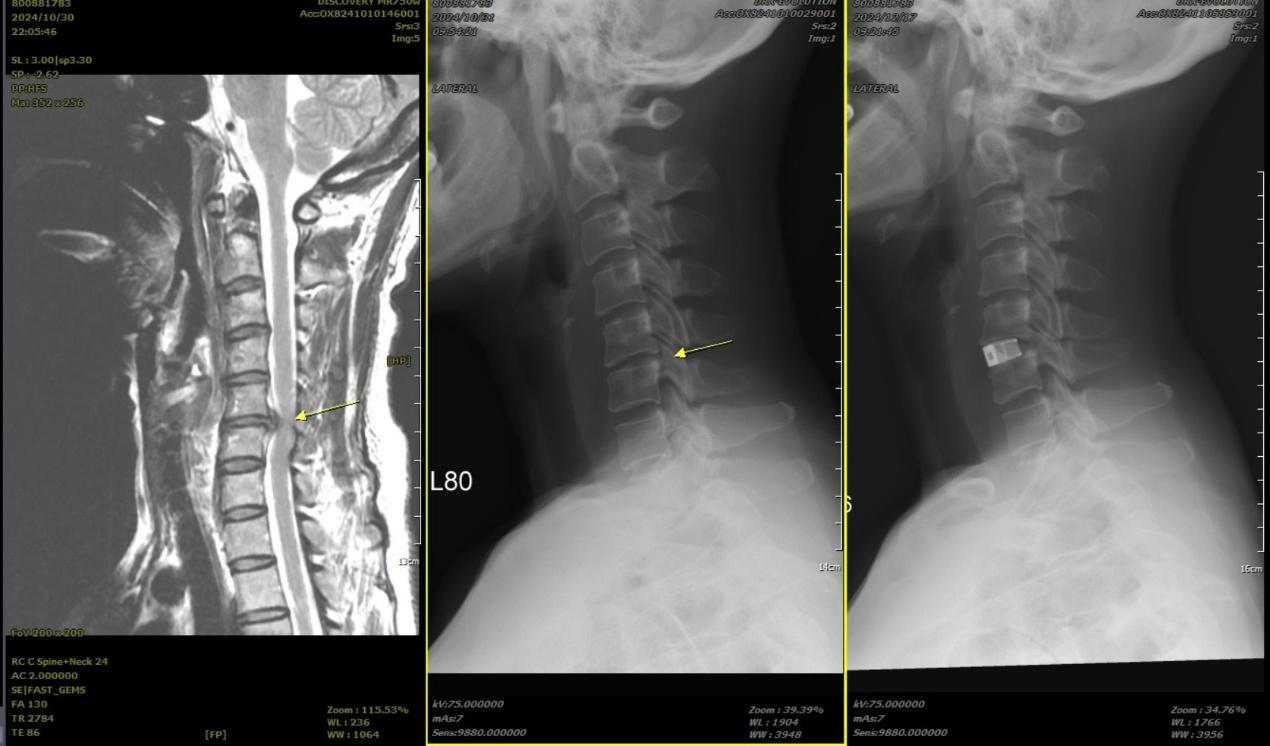
Anterior Cervical Discectomy and Fusion (ACDF) is currently the most established surgical technique. The surgeon approaches from the front of the neck through natural tissue planes, completely removes the damaged intervertebral disc, and places an interbody fusion cage into the disc space. This is often combined with bone graft or bone morphogenetic proteins to promote fusion between the adjacent vertebrae, achieving spinal stabilization and relieving nerve compression.
-
Advantages: Long-established track record; partially covered by National Health Insurance; provides the most thorough neural decompression; can help correct spinal curvature.
-
Limitations: The fused cervical segment loses its range of motion, and increased stress may be transferred to the adjacent segments (adjacent segment disease).
2. Endoscopic Surgery (Posterior Cervical Approach)
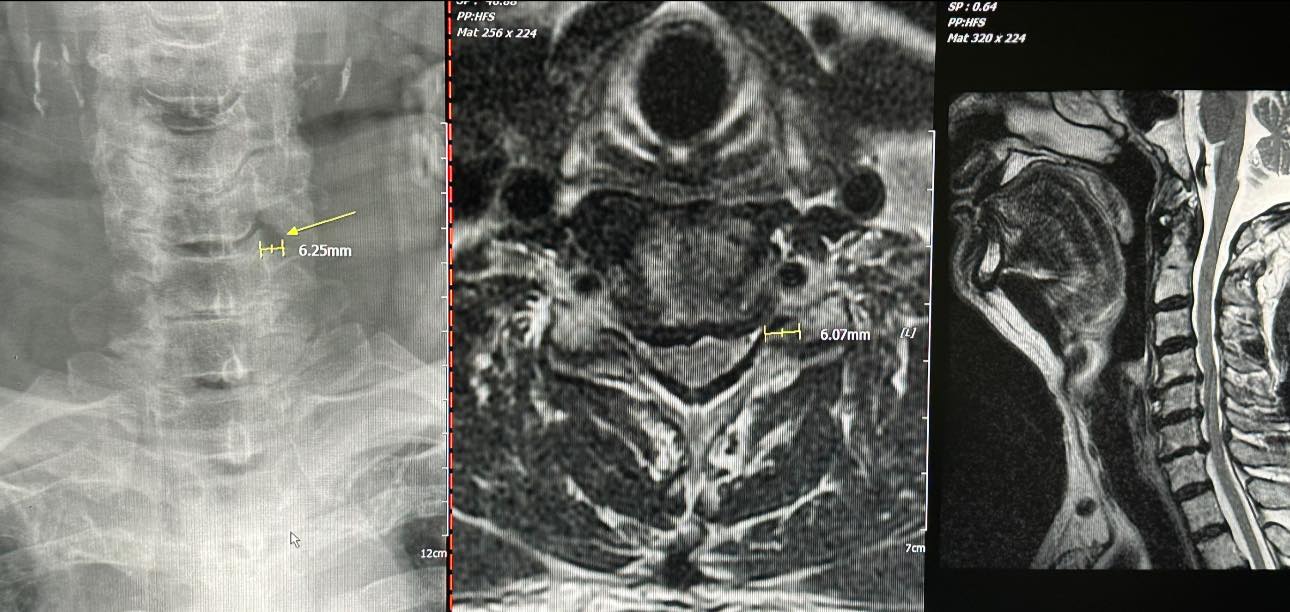
This is currently the procedure with the smallest incision—approximately 0.5–0.8 cm. The surgeon accesses the spine from the back of the neck, using a high-definition endoscope and specialized instruments to precisely remove bone spurs or disc fragments compressing the nerve root.
-
Advantages: No implants required; no fusion needed; minimal disruption to spinal structures.
-
Ideal Candidates: Patients with unilateral nerve root compression (not spinal cord compression) and simple disc herniation without significant degeneration or instability.
3. Artificial Disc Replacement (ADR)
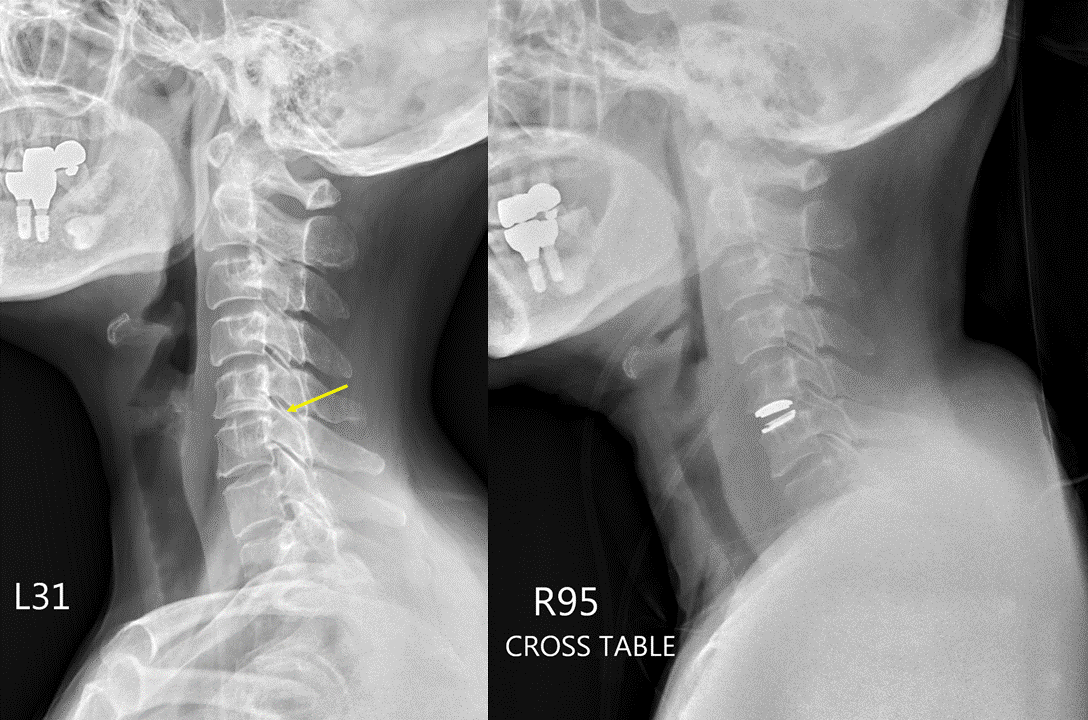
In Artificial Disc Replacement (ADR) , after removing the damaged disc, a mobile artificial joint is implanted to replicate the shock-absorbing and rotational functions of a natural intervertebral disc.
-
Advantages: Preserves neck mobility; reduces the likelihood of adjacent segment degeneration; most patients do not require prolonged use of a rigid cervical collar after surgery.
-
Ideal Candidates: Younger patients; those with preserved disc height; patients without severe osteoporosis or significant facet joint degeneration.
Traditional Surgery vs. Minimally Invasive Surgery
The Core Goals of "Minimally Invasive" Surgery: Neural Decompression and Structural Stability
Minimally invasive surgery is not merely about achieving a smaller incision. Its core objectives are:
-
Precise Decompression: Removal of the lesion compressing the nerve root or spinal cord (such as bone spurs or herniated disc fragments).
-
Structural Preservation: Minimizing disruption to surrounding muscles, ligaments, and healthy bone.
-
Functional Recovery: Shortening anesthesia time, reducing postoperative pain, and enabling patients to return to daily life as early as possible.
To help patients more intuitively understand the advantages of each surgical option for cervical disc herniation, we have compiled the following comparison table:
Comparison Table of Cervical Spine Surgery Techniques
| Item |
Traditional Open Surgery |
Discectomy and Fusion (ACDF) Artificial Disc Replacement (ADR)
|
Posterior Endoscopic Surgery |
| Incision Length | > 5 cm | 2-3 cm | < 1 cm |
| Blood Loss | Higher | Very low | Minimal |
| Hospital Stay | 5–7 days | 2–3 days | 1–2 days (possibly outpatient) |
| Postoperative Pain | Higher | Low to moderate | Low |
| Risk of Nerve Injury | Low–moderate (limited by unaided view) | Low |
Low (high-definition endoscopic view) |
| Return-to-Work Time | 1–3 months | 2–4 weeks | Within 1 week |
Cervical Minimally Invasive Surgery FAQ
Q:Will I become paralyzed after cervical spine surgery?
With the dual protection of modern microscopic techniques and intraoperative neuromonitoring (IONM) , the risk of severe nerve injury (such as paralysis) is very low, and most cases are temporary. If an abnormality is detected during surgery, the surgeon can immediately adjust the procedure (e.g., reducing retraction pressure or elevating blood pressure) to prevent potential permanent paralysis.
【Key Evidence】
According to multiple large-scale meta-analyses published in recent years in authoritative journals such as Spine and the North American Spine Society Journal, minimally invasive endoscopic surgery (incision < 1 cm) has an overall complication rate of only 5% , and a serious nerve injury rate of approximately 6% , with most being temporary.[2]
Q:How long does an artificial disc (ADR) last?
Current high-quality artificial discs have been shown to maintain good function in long-term follow-up studies of up to 10 years after surgery.
【Key Evidence】
A 2024 study published in Spine demonstrated that cervical artificial disc replacement (CDA) showed lower rates of secondary surgery and complications compared to traditional fusion surgery in 10-year long-term follow-up. Its motion-preserving properties effectively maintain cervical spine function and reduce the stress of adjacent segment degeneration.[3]
Q:Can I still turn my neck after cervical disc herniation surgery?
According to a 2024 network meta-analysis published in the leading spine journal The Spine Journal, all types of cervical artificial disc replacement (CDA) demonstrated significantly superior postoperative preservation of cervical mobility compared to traditional fusion surgery (ACDF). Furthermore, a 2024 study published in The Spine Journal confirmed that overall cervical range of motion did not significantly decrease after single-level ACDF, indicating that the impact of single-level fusion on daily activities is extremely limited.
【Key Evidence】
According to a 2024 network meta-analysis published in the leading spine journal The Spine Journal, all types of cervical artificial disc replacement (CDA) demonstrated significantly superior postoperative preservation of cervical mobility compared to traditional fusion surgery (ACDF).[4]
Q:Is difficulty swallowing normal after cervical spine surgery?
In anterior cervical surgery (ACDF), the esophagus must be temporarily retracted to access the surgical site. Therefore, difficulty swallowing is quite common after this procedure. The symptoms are most noticeable in the early postoperative period and typically partially resolve within one month. These findings support viewing dysphagia as a common, self-limiting postoperative symptom rather than a true complication.
【Key Evidence】
According to a 2025 large-scale meta-analysis published in the North American Spine Society Journal, the incidence of dysphagia as a complication after anterior cervical discectomy and fusion (ACDF) was reported to be 9.5% .A 2024 meta-analysis published in Cureus further indicated that the risk of complications such as dysphagia significantly increases with prolonged operative time or multi-level surgery. Therefore, optimizing surgical duration, minimizing unnecessary multi-level fusions, and selecting appropriate implant designs can help reduce the incidence of postoperative dysphagia and related complications.[5]
Q:Is physical therapy needed after surgery?
Highly recommended. Although surgery relieves the physical compression, long-standing poor posture and muscle imbalance require professional physical therapy guidance to completely prevent recurrence.
【Key Evidence】
According to a 2025 systematic review and meta-analysis published in the Irish Journal of Medical Science evaluating the effectiveness of postoperative physical therapy for cervical spine surgery, the results showed:
-
Physical therapy has a high level of evidence for long-term functional recovery.
-
Early home-based exercise is effective and feasible.
-
Short-term pain improvement also reached clinical significance.
The authors concluded: "Surgery combined with physical therapy intervention improves recovery. Physical therapy should include structured neck-specific training and integrate psychosocial management. Early home-based exercise is feasible and effective." [6]
This article is for educational purposes only. Please consult a qualified physician for specific medical advice.
【References】
1.Yoon WW, Koch J. Herniated discs: when is surgery necessary? EFORT Open Rev. 2021 Jun 28;6(6):526-530. doi: 10.1302/2058-5241.6.210020. PMID: 34267941; PMCID: PMC8259252.
【Key Evidence】
According to a 2021 clinical review published in EFORT Open Reviews (the official journal of the European Federation of National Associations of Orthopaedics and Traumatology), the authors systematically compiled surgical indications for disc herniation at different spinal levels. For cervical disc herniation (CDH), the study identified:
- Absolute surgical indications: Progressive neurological deficits accompanied by myelopathy or cauda equina syndrome constitute absolute indications for surgery.
- Relative surgical indications: Surgery may be considered if symptoms persist without improvement after 6 months of conservative treatment.
- Surgical timing and prognosis: The literature specifically noted that the duration of preoperative symptoms is closely correlated with surgical outcomes—patients who underwent surgery within 6 months of symptom onset had significantly better postoperative pain improvement than those who had surgery after more than 6 months.
Therefore, when conservative treatment is ineffective, patients should not wait indefinitely. Surgical intervention should be evaluated at an appropriate time (recommended within 6 months) to prevent irreversible neurological damage.
2-1.Willett N, Ikwuegbuenyi CA, Inzerillo S, et al. Complications in Minimally Invasive Cervical Spine Surgery - Tubular, Uniportal, and Biportal Endoscopic Surgery (2013-2024): A Proportional Meta-Analysis. Spine (Phila Pa 1976). 2025 Nov 27. doi: 10.1097/BRS.0000000000005581. PMID: 41307142.
2-2.Tavanaei R, Ansari A, Hatami A, et al. Postoperative complications of anterior cervical discectomy and fusion: A comprehensive systematic review and meta-analysis. N Am Spine Soc J. 2025;21:100596. doi: 10.1016/j.xnsj.2025.100596. PMID: 40145067.
2-3.Zavras AG, Acosta JR, Holmberg KJ, et al. Effect of device constraint: a comparative network meta-analysis of ACDF and cervical disc arthroplasty. Spine J. 2024 Oct;24(10):1858-1871. doi: 10.1016/j.spinee.2024.05.016. PMID: 38843960.
【Key Evidence】
According to multiple large-scale meta-analyses published in recent years in authoritative journals such as Spine and the North American Spine Society Journal:
- Minimally Invasive Endoscopic Surgery (incision < 1 cm): Overall complication rate of only 5% , with a serious nerve injury rate of approximately 6% , most of which are temporary.
- Anterior Cervical Discectomy and Fusion (ACDF): Large-scale data covering over 50,000 patients showed a postoperative mortality rate of only 0.1% , with cases of permanent paralysis due to nerve injury being extremely rare.
- Artificial Disc Replacement (ADR): Not only is its safety profile comparable to ACDF, but it also demonstrates superior outcomes in reducing adjacent segment degeneration risk, preserving cervical mobility, and improving pain compared to traditional fusion surgery.
Choosing an experienced surgeon and a medical facility equipped with advanced technology is the key to ensuring surgical safety.
3. Quinto ES Jr, et al. Ten-Year Outcomes of Cervical Disc Arthroplasty Versus Anterior Cervical Discectomy and Fusion : A Systematic Review With Meta-Analysis. Spine (Phila Pa 1976). 2024;49(9):603-611. doi: 10.1097/BRS.0000000000004887.
【Key Evidence】
10‑Year Evidence: Artificial disc replacement demonstrates stable functional outcomes at 10 years postoperatively, with a significantly lower reoperation rate compared to traditional fusion surgery.
Long‑Term Durability: At 10‑year follow‑up, artificial discs continue to effectively maintain cervical mobility and reduce the risk of reoperation.
4-1.Zhang Y, Ju J, Wu J. Comparison of cervical disc arthroplasty versus anterior cervical discectomy and fusion for the treatment of single-segment cervical degenerative disc disease with a minimum of 4-year follow-up: a systematic review and meta-analysis of randomized controlled trials. J Orthop Surg Res. 2025 Aug 12;20(1):758. doi: 10.1186/s13018-025-06189-x. PMID: 40797275; PMCID: PMC12344910.
4-2.Zavras AG, et al. Effect of Device Constraint: A Comparative Network Meta-Analysis of ACDF and Cervical Disc Arthroplasty. Spine J. 2024 Oct;24(10):1858-1871. doi: 10.1016/j.spinee.2024.05.016.
【Key Evidence】
According to a 2024 network meta-analysis published in the leading spine journal The Spine Journal, which pooled data from 41 clinical trials involving 5,533 patients specifically comparing postoperative range of motion among different types of artificial discs, the results clearly confirmed that all types of cervical disc arthroplasty (CDA) preserve significantly greater cervical mobility than traditional fusion surgery (ACDF) (P < 0.001). Among these, unconstrained (biomimetic) devices demonstrated superior motion preservation compared to constrained and semi‑constrained devices, making them the most suitable option for patients wishing to preserve cervical flexibility.Furthermore, a 2025 meta-analysis published in the Journal of Orthopaedic Surgery and Research (17 RCTs, 3,303 patients, with a minimum of 4 years of follow-up) provided additional evidence of the long‑term advantages of CDA. The CDA group showed significantly lower rates of reoperation and adjacent segment degeneration compared to the ACDF group, as well as superior neurological success rates and pain improvement.
5-1.Tavanaei R, Ansari A, Hatami A, et al. Postoperative complications of anterior cervical discectomy and fusion: A comprehensive systematic review and meta-analysis. N Am Spine Soc J. 2025 Mar;21:100596. doi: 10.1016/j.xnsj.2025.100596. PMID: 40145067.
5-2.Ohana N, Koch JJ, Schleifer D, et al. Reducing Dysphagia Following Anterior Cervical Spine Surgery: Insights From a Meta-Analysis. Cureus. 2024 Nov 20;16(11):e74127. doi: 10.7759/cureus.74127. PMID: 39575355.
5-3.Louie PK, Lipson P, Alostaz M, Bansal A, Cherel M, Reynolds L, Shen J, Eley N, Varley E, Leveque JC, Nemani VM. Subjective and Functional Dysphagia After Anterior Cervical Spine Surgery: A Prospective Controlled Study. J Bone Joint Surg Am. 2026 Mar 18;108(6):436-442. doi: 10.2106/JBJS.25.00847. Epub 2025 Dec 26. PMID: 41452954.
【Key Evidence】
1. Dysphagia is one of the most common complications of anterior cervical spine surgery.
According to a 2025 large‑scale meta‑analysis published in the North American Spine Society Journal (covering 222 studies, 50,584 patients), the overall postoperative complication rate for anterior cervical discectomy and fusion (ACDF) was 16% . The most common complications in order were:
-
Postoperative neck swelling: 11.3%
-
Non‑union (fusion failure): 10.0%
-
Dysphagia: 9.5%
-
Cage subsidence: 9.4%
-
Neurological deterioration: 7.7%
-
Hoarseness: 2.3%
2. These complications can be reduced by optimizing surgical factors.
According to a 2024 meta‑analysis published in Cureus (21 studies), the risk of complications such as dysphagia is significantly influenced by:
-
Prolonged operative time: Significantly increases risk.
-
Multi‑level surgery: Significantly increases risk.
-
Implant design: Traditional plate‑and‑cage constructs carry higher risk, while low‑profile implants and stand‑alone cages significantly reduce risk.
Therefore, optimizing operative time, minimizing unnecessary multi‑level fusions, and selecting appropriate implant designs can all help reduce the incidence of postoperative dysphagia and related complications.
6.Ergan M, Şahin Eİ, Tümtürk İ, Özden F, Bakırhan S, Başkurt F. Effectiveness of physiotherapy interventions after cervical neurosurgery: systematic review and meta-analysis. Ir J Med Sci. 2025;194(4):1417-1441. doi: 10.1007/s11845-025-04016-0. PMID: 40711522.
【Key Evidence】
According to a 2025 systematic review and meta‑analysis published in the Irish Journal of Medical Science, which pooled 22 studies evaluating the effectiveness of postoperative physical therapy for cervical spine surgery, the results showed:
1. High‑level evidence for long‑term functional recovery
Physical therapy intervention demonstrated a high level of evidence for long‑term improvement in cervical disability (NDI) (effect size ES = –0.81), indicating that combining surgery with physical therapy significantly improves patients' long‑term functional status.
2. Early home‑based exercise is effective and feasible
The study specifically noted that early home‑based exercise is both feasible and effective. Physical therapy should include structured neck‑specific training and may be supplemented with electrotherapy and manual techniques as appropriate.
3. Short‑term pain improvement also shows clinical relevance
Although the evidence level for short‑term pain improvement (VAS) was lower (effect size ES = 0.37), it still demonstrated a positive trend toward improvement.The authors concluded: "Surgery combined with physical therapy intervention improves recovery. Physical therapy should include structured neck‑specific training and integrate psychosocial management. Early home‑based exercise is feasible and effective."
Therefore, receiving professional physical therapy after surgery not only helps restore cervical function but also establishes correct movement patterns and reduces the risk of recurrence.
Author & Medical Review: Chien–Chun Chang, MD, PhD
【Pioneer in Spine Endoscopic Surgery in Taiwan】
The first physician in Taiwan to demonstrate computer-assisted navigation in spine endoscopy, dedicated to improving the precision and safety of spine and joint surgery.His research, “Computer-assisted navigation in spine endoscopy,” was published in 2020 in the internationally recognized medical journal BMC Musculoskeletal Disorders (IF: 2.4), providing important evidence-based support for minimally invasive surgery.
【Minimally Invasive Joint Reconstruction Team】
Dr. Chang received specialized training in minimally invasive robotic-assisted joint replacement surgery in Japan and led his team to obtain international training certification for the ROSA robotic system. He subsequently established the International Robotic Minimally Invasive Joint Replacement Center and Training Demonstration Site.
【Areas of Expertise】
.Joint Reconstruction and Replacement: Robot-assisted minimally invasive knee replacement (ROSA Knee), minimally invasive total knee and hip replacement.
.Minimally Invasive Spine Surgery: Minimally invasive endoscopic surgery of the cervical and lumbar spine, 3D computer-navigated minimally invasive spine surgery, complex revision spine surgery and scoliosis correction, and spine fracture surgery.
.Pain Management and Regenerative Medicine: Sciatica, herniated discs, chronic low back pain, regenerative treatment for degenerative joint disease, and osteoporosis.
【Current Positions and Professional Experience】
.Taichung Municipal Elderly Rehabilitation General Hospital|Assistant Vice President & Director, Department of Orthopedics
.Ministry of Education, Taiwan|Assistant Professor
.Taiwan Society of Minimally Invasive Spine Surgery (TSMISS)|Current Board Member
.Taiwan Society of Endoscopic Spine Surgery (TSESS)|Current Board Member
.2024 National Quality Seal (SNQ)|Project Leader, A New Milestone in Spine and Joint Surgery for Older Adults: A Standardized Fast-Recovery Protocol
.2023 National Quality Seal (SNQ)|Project Leader, Standardized Protocol for Computer Navigation in Complex Spine Surgery
.Taichung Medical Association|10th Medical Contribution Award – Excellence in Professional Advancement
.ROSA Robotic System|International Robotic Training and Education Certified Instructor
.Medtronic|Director, International Computer Navigation Demonstration Center / International Lecturer in Computer-Navigated Spine Surgery
.2025 CAOS AP Faculty|International Committee Member, Asia-Pacific Computer-Assisted Orthopedic Surgery Conference
.ESPINEA|Asia-Pacific Faculty
.AO Spine Asia Pacific|Selected Fellow