

Groin Pain Keeping You from Walking? A 30-Second Self-Test for Hip Osteoarthritis & Treatment Evaluation
Author & Reviewer: Dr. Chien-Chun Chang | Board-Certified Orthopedic Surgeon
【Article Summary】Key Points from Dr. Chien-Chun Chang
- Common Warning Signs: A dull ache in the groin, limping while walking, or limited range of motion are often important early warning signs of hip osteoarthritis (degeneration).
- 30-Second Self-Test: Simple mobility tests (such as the knee-to-chest test and the figure-4 test) can help you initially assess whether your discomfort is due to hip joint pathology rather than a simple muscle strain.
- Stepwise Treatment Approach: In the early stages, symptoms can be managed with oral medications, physical therapy, and joint injections. For more advanced wear, minimally invasive hip surgery may be evaluated to quickly improve quality of life.
- Rapid Return to Daily Life: Minimally invasive techniques involve smaller incisions and less tissue damage, allowing most patients to get out of bed early after surgery, shorten recovery time, and significantly reduce surgical risks.
This article provides an in-depth analysis of the innovative minimally invasive techniques developed by Dr. Chien-Chun Chang's team: the surgical incision is reduced to 6-8 cm, with a strong emphasis on muscle-sparing techniques. This enables patients to get out of bed within 24 hours after surgery, achieving the goals of less pain and faster recovery.
When Walking Becomes a Burden
In the past, spine or hip surgery often carried the fear of "large incisions, high risks, and slow recovery." However, with the advancement of medical technology, the Minimally Invasive Spine & Joint Team led by Dr. Chien-Chun Chang is redefining treatment options through innovative, precise, minimally invasive techniques.
This article provides an in-depth look at the causes of hip degeneration, how to recognize the symptoms, and how modern minimally invasive surgery achieves the ultimate goals of "smaller incisions, less pain, and faster recovery."
Three Warning Signs of Hip Degeneration
Hip degeneration is a long-term pathological process. In its early stages, many patients mistakenly attribute the symptoms to lower back pain or a muscle strain, which can delay proper treatment.
1. Groin Pain
Groin pain is the most common "hidden signal" of hip degeneration. The hip joint is located at the root of the thigh. When joint cartilage wears down and causes inflammation, the pain is often first felt in the groin area (inguinal region). Sometimes, it can even radiate to the inner thigh, buttock, or around the knee, leading to misdiagnosis. This pain typically worsens with walking, climbing stairs, or standing for long periods, and you may feel stiffness in the morning upon waking.
【Why Can Hip Degeneration Feel Like Knee Pain?】
Many patients experience chronic knee soreness, but upon examination, the root cause turns out to be in the hip joint. This phenomenon is called "referred pain." It occurs because the hip and knee joints share nerve pathways (branches of the obturator and femoral nerves). The brain can sometimes misinterpret the pain signals coming from the hip as knee pain.
Dr. Chien-Chun Chang reminds us that if knee pain is accompanied by "difficulty taking a full stride" or a "deep ache in the buttock," and not just local redness or swelling around the knee, it could be a chain reaction caused by hip degeneration.
This "lower back–hip–knee" kinetic chain dysfunction means that if the underlying mechanical issue of the hip is not addressed, treating the knee alone with physical therapy will only provide temporary relief. Worse, the patient may adopt a compensatory walking pattern that can eventually cause wear and tear on the previously healthy knee joint.
2. Joint Stiffness and Limited Range of Motion
Have you started to notice that putting on socks has become difficult? Or do you find it hard to swing your leg in and out of the car? These could be signs that your joint space is narrowing and bone spurs are forming, which restrict the normal range of motion of the joint.
In medical evaluation, we use the Visual Analog Scale (VAS) to quantify and assess the patient's pain level.
3. Leg Length Discrepancy and Limp
When one hip joint is severely degenerated—with cartilage loss and even bone deformation—the pelvis may tilt to compensate. This often results in a visually noticeable "leg length discrepancy."
Over time, this not only causes a limp while walking but can also lead to lumbar scoliosis and accelerate degeneration in the opposite knee joint.
Stages of Hip Degeneration: Which Stage Are You In?
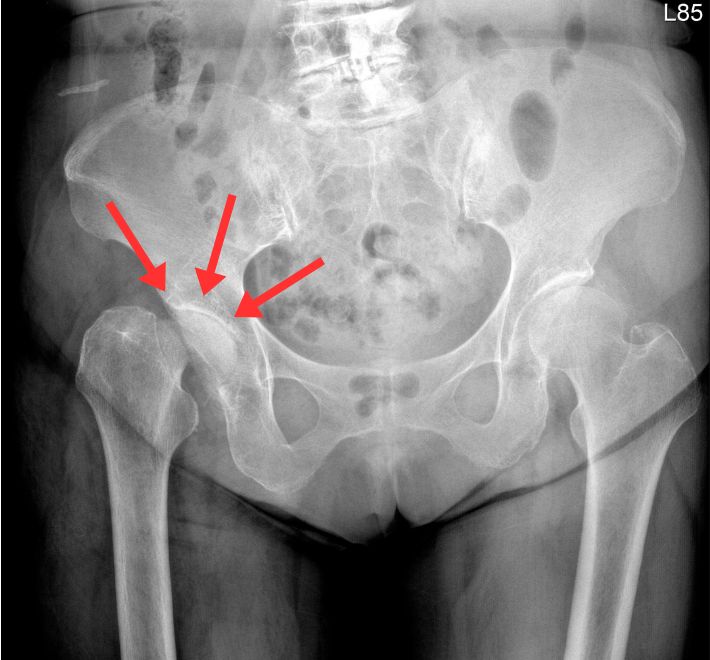
Clinically, we often refer to the Kellgren-Lawrence (K-L) Grading System to classify the severity of hip osteoarthritis. This helps patients understand why a physician may recommend a specific treatment approach:
-
Early Stage (Grades 1–2)
Slight narrowing of the joint space, with possible small bone spurs. Patients often experience localized soreness after activity, which typically subsides with rest. -
Moderate Stage (Grade 3)
Significant joint space narrowing, increased bone spur formation, and progressive cartilage wear. At this stage, referred pain (such as knee pain, as mentioned earlier) becomes more frequent. -
Advanced Stage (Grade 4)
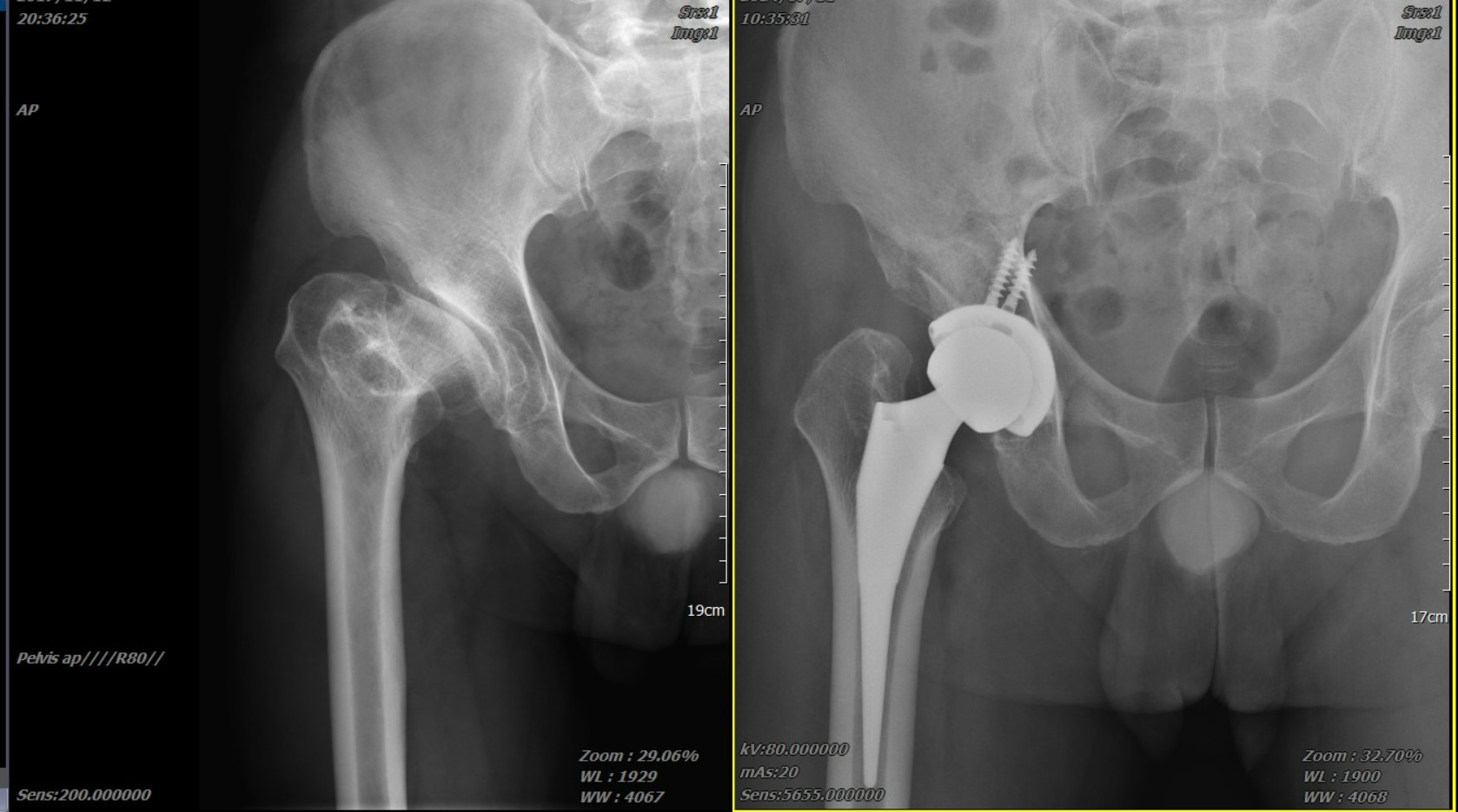
The joint space has almost disappeared, with direct bone-on-bone contact, along with the development of cysts and bone hardening. At this point, quality of life is severely impacted, and this is usually the optimal time to consider minimally invasive hip replacement surgery.
30-Second Home Self-Test: Is Your Hip Joint Flexible?
Dr. Chien-Chun Chang recommends the following two simple movements to help you perform a preliminary assessment of your hip joint mobility:
-
Figure-4 Test (Patrick's Test)
While lying flat on your back, place the ankle of one leg on the knee of the opposite leg, forming a "figure-4" shape. If you are unable to press the knee down toward the floor without difficulty, or if you experience sharp pain in the groin area, there is a high probability of hip joint pathology.
-
Knee-to-Chest Test
While lying flat on your back, try to pull one knee toward your chest. If you feel a noticeable blockage or pain in the groin area, it may indicate that the joint capsule is inflamed or has undergone structural changes.
Integrated Non-Surgical Treatments
Not all cases of degeneration require immediate surgery. The team led by Dr. Chien-Chun Chang advocates a "stepwise treatment strategy." For patients in the early to moderate stages, we recommend:
Weight Management and Joint Unloading
For every 1 kg of body weight lost, the pressure on the hip joint during walking can be reduced by 3–5 kg. This has a decisive impact on slowing cartilage wear.
Targeted Physical Therapy
Not all exercises are suitable for patients with joint degeneration. The focus should be on strengthening the gluteus medius and core muscles to stabilize the pelvis and reduce joint impact.
Modern Injection Therapies
-
Hyaluronic Acid: Increases joint lubrication and reduces friction-related pain.
-
PRP (Platelet-Rich Plasma): For moderate-stage patients, this biological repair mechanism helps reduce inflammation and promote tissue healing.
Minimally Invasive Hip Replacement Surgery
When conservative treatments (such as physical therapy and medication) no longer provide adequate relief, surgical intervention becomes the key to restoring quality of life. The core strength of Dr. Chien-Chun Chang’s team lies in combining minimally invasive techniques with precision medical technology to achieve the treatment goals of less pain and faster recovery for patients.
▋Minimally Invasive Hip Replacement
The core principle of this surgery lies in preserving muscles and the joint capsule. Traditional surgery requires cutting through multiple muscles to access the joint. In contrast, the minimally invasive approach enters through natural tissue planes between muscles, allowing for precise joint replacement while minimizing muscle damage and preserving the joint capsule.
The direct benefits of this technique for patients include:
-
Minimal Tissue Trauma: The stabilizing structures around the hip joint are largely preserved.
-
Significantly Less Postoperative Pain: Since muscles are not cut, postoperative discomfort is greatly reduced.
-
Accelerated Recovery with Minimal Rehab: Most patients are discharged within 2–3 days, the duration of walker use is significantly shortened, and they can quickly return to daily activities.
The Advantages of Minimally Invasive Technique: More Than Just a Smaller Incision
The core of "minimally invasive" technique lies in muscle preservation.
-
Tissue Protection: Through a small incision of approximately 6–8 cm (depending on the individual case), the surgery is performed with minimal detachment of muscles or ligaments.
-
Reduced Stress: For elderly patients or those with underlying conditions such as diabetes or hypertension, the minimally invasive approach significantly reduces blood loss and the body's stress response, thereby lowering the risk of complications.
Precise Diagnosis Is the Key to Successful Treatment
Dr. Chien-Chun Chang's team emphasizes that all successful medical interventions are built on a foundation of "precise diagnosis."
-
Imaging Assessment: X-rays are used to evaluate joint space, while MRI (Magnetic Resonance Imaging) or CT (Computed Tomography) scans are employed to assess bone mineral density (BMD) and the extent of soft tissue damage.
-
Multidisciplinary Integration: Hip joint issues often overlap with lumbar spine conditions. Our team integrates multiple specialties—including Orthopedics, Neurosurgery, and Rehabilitation Medicine—to provide a one-stop, holistic care approach, ensuring that the root cause of pain is accurately identified and addressed.
Postoperative Rehabilitation & Enhanced Recovery After Surgery (ERAS) Protocol
Dr. Chien-Chun Chang utilizes innovative minimally invasive techniques that preserve muscles and the joint capsule, resulting in low postoperative pain and rapid recovery with minimal need for formal rehabilitation. However, Dr. Chang emphasizes: "A successful surgery is only half the battle—the other half is recovery." His team adopts the ERAS (Enhanced Recovery After Surgery) protocol, which aims to shorten hospital stays and reduce pain.
-
Walking on the Day of or the Day After Surgery
Benefiting from the muscle- and capsule-sparing nature of the minimally invasive approach, most patients can get out of bed within 24 hours after surgery. With the assistance of a walker, they are encouraged to try standing or walking—this is crucial for preventing deep vein thrombosis (DVT) in the lower limbs.
-
Multimodal Analgesia Strategy
Combining nerve blocks and precision medication to replace traditional high-dose morphine-based painkillers, thereby reducing postoperative nausea and vomiting.
-
Home-Based Functional Training
Providing personalized rehabilitation videos and guidelines to ensure a smooth transition from the hospital ward back to daily social activities and exercise.
Conclusion: Reclaiming the Power to Walk — It All Starts with Precision Medicine
Hip degeneration should not become a burden that limits your later years. With a comprehensive evaluation by Dr. Chien-Chun Chang's Minimally Invasive Spine & Joint Team, innovative minimally invasive techniques, and a personalized treatment plan, we do more than just replace a joint — we help you regain the freedom to walk without limits.If you are struggling with persistent groin pain, leg length discrepancy, or unexplained discomfort while walking, we encourage you to seek professional evaluation from an experienced orthopedic surgeon. Let advanced medical technology guide you back to a healthier, more active life.
FAQs About Hip Degeneration
Here are professional answers from Dr. Chien-Chun Chang's team to some of the most frequently asked questions about hip degeneration:
Q:How can I tell if my pain is coming from my lumbar spine or my hip joint?
This is clinically known as "hip-spine syndrome." Pain originating from the lumbar spine is often accompanied by numbness or a radiating pain that travels down the back of the leg (sciatica). In contrast, hip joint pain is typically concentrated in the groin area or the outer thigh.Dr. Chang recommends that if you experience limping or have difficulty taking a full stride, it is advisable to undergo imaging studies for both the lumbar spine and the hip joint. A differential diagnosis should be performed by a medical team with expertise in both spinal and joint disorders.
【Key Evidence】
According to a 2021 systematic review and meta-analysis published in the leading osteoarthritis journal Osteoarthritis and Cartilage, the study confirmed that approximately 29% of patients with hip osteoarthritis experience neuropathic pain, which commonly presents in the groin, buttock, or thigh regions.。[1][2]
Q:How large is the incision for minimally invasive hip surgery, and how long does it take to return to normal life?
The incision for minimally invasive surgery is typically around 6–8 cm. Because the core muscles are not cut, postoperative pain is significantly lower than with traditional surgery. Most patients are discharged within 2–3 days, can move freely around the home within 2 weeks, and may return to light work or driving within 4–6 weeks. By 3 months after surgery, patients can begin low-impact activities such as brisk walking or swimming.
【Key Evidence】
According to a 2023 meta-analysis published in the Journal of Orthopaedic Surgery and Research, minimally invasive techniques are significantly associated with higher return-to-work rates and earlier return-to-work times, with most patients returning to work within 2 to 3 months after surgery.[3]
Q:Can someone over 80 years old still undergo hip replacement surgery?
As long as a thorough preoperative evaluation is completed and blood pressure and blood sugar are well controlled, age is not an absolute contraindication. Modern minimally invasive surgery involves less bleeding and shorter operative time (typically completed within one hour), which places less stress on cardiopulmonary function. For elderly patients, regaining the ability to walk after surgery can actually help prevent complications associated with prolonged bed rest, such as pneumonia or pressure sores. This is a clear example of how "precision medicine" is increasingly friendly to the elderly.
【Key Evidence】
According to a 2025 systematic review published in the Journal of Orthopaedics, the study confirmed that octogenarians who underwent total hip replacement had surgical complication rates comparable to those of younger patients. Although medical complications were slightly higher in the elderly group, the difference was minimal.。[4]
This article is for educational purposes only. Please consult a qualified physician for specific medical advice.
【References】
1. Zolio L, Lim KY, McKenzie JE, et al. Systematic review and meta-analysis of the prevalence of neuropathic-like pain and/or pain sensitization in people with knee and hip osteoarthritis. Osteoarthritis Cartilage. 2021 Aug;29(8):1096-1116. doi: 10.1016/j.joca.2021.03.021. PMID: 33971205.
【Key Evidence】
According to a 2021 systematic review and meta-analysis published in the leading osteoarthritis journal Osteoarthritis and Cartilage, approximately 29% of patients with hip osteoarthritis experience neuropathic pain. This type of pain often presents as referred pain, which can be felt in the groin, buttock, or thigh regions. Therefore, when encountering patients with coexisting low back pain and hip pain, clinicians must carefully evaluate both areas to reach an accurate diagnosis and make appropriate treatment decisions.
2. Huppert A, Ambrosio L, Nwosu K, Pico A, Russo F, Vadalà G, Papalia R, Denaro V. Previous lumbar spine fusion increases the risk of dislocation following total hip arthroplasty in patients with hip-spine syndrome: a systematic review and meta-analysis. BMC Musculoskelet Disord. 2024 Sep 13;25(1):732. doi: 10.1186/s12891-024-07823-1. PMID: 39272046; PMCID: PMC11395984.
【Key Evidence】
According to a 2024 systematic review and meta-analysis published in BMC Musculoskeletal Disorders, patients who had previously undergone lumbar fusion surgery had a significantly increased risk of hip dislocation when subsequently undergoing total hip replacement (odds ratio 3.17). This finding indirectly confirms the close biomechanical link between the lumbar spine and the hip joint—when spinal structure is altered, it directly affects hip joint stability. This further underscores the importance of thorough evaluation of both areas when low back and hip pain coexist.
3. Soleimani M, Babagoli M, Baghdadi S, et al. Return to work following primary total hip arthroplasty: a systematic review and meta-analysis. J Orthop Surg Res. 2023;18(1):1-12. doi: 10.1186/s13018-023-03578-y.
【Key Evidence】
According to a 2023 meta-analysis (48 studies) published in the Journal of Orthopaedic Surgery and Research, up to 87.9% of patients who were employed before surgery returned to work after surgery. The literature indicates that minimally invasive techniques are significantly associated with higher return-to-work rates and earlier return-to-work times, with most patients returning to their jobs within 2 to 3 months postoperatively.
4. Rusche A, Osterhoff G, Roth A, Schopow N. Perioperative outcome of primary total hip arthroplasty in octogenarians – A systematic review. J Orthop. 2025 Feb;60:152-158. doi: 10.1016/j.jor.2024.11.001. PMID: 39618723.
【Key Evidence】According to a 2025 systematic review (covering 494,144 patients) published in the Journal of Orthopaedics, octogenarians who underwent total hip replacement had surgical complication rates comparable to those of younger patients. Although medical complications were slightly higher in the elderly group, the difference was minimal. Postoperative mortality rates ranged from 0.33% to 1.96%. The study concluded that age alone should not be considered a barrier to surgery, and that indications should be based on comorbidities and overall health status rather than age.These findings reinforce that advanced age is not a contraindication to surgery. The key lies in comprehensive preoperative evaluation, precise minimally invasive techniques during surgery, and enhanced recovery protocols after surgery—which are exactly the core strengths of Dr. Chien-Chun Chang's team.
Author & Medical Review: Chien–Chun Chang, MD, PhD
【Taiwan's Pioneer in Computer-Navigated Spine Endoscopy】
Dr. Chang is the first surgeon in Taiwan to demonstrate computer-assisted navigated spinal endoscopic surgery, advancing the precision and safety of minimally invasive spine surgery.His research, "Computer-assisted Navigation in Spine Endoscopy," was published in BMC Musculoskeletal Disorders (2020, Impact Factor 2.4), providing important clinical evidence supporting computer-assisted minimally invasive spine surgery.
【Areas of Expertise】
Minimally Invasive Spine Surgery
- Cervical and lumbar endoscopic spine surgery
- 3D computer-assspine surgery
- Complex revision spine surgery
- Scoliosis correction
- Spine fracture surgery
Navigation Surgery
- Robot-assisted knee replacement (ROSA Knee)
- Minimally invasive total knee replacement
- Minimally invasive total hip replacement
Pain Management & Regenerative Medicine
- Sciatica
- Herniated disc
- Chronic low back pain
- Regenerative treatment for osteoarthritis
- Osteoporosis management
【Professional Appointments】
- Assistant Superintendent & Chief of Orthopedic Surgery
Taichung Municipal Senior Rehabilitation General Hospital - Ministry of Education Certified Assistant Professor
- Board Member (13th Term)
Taiwan Society of Minimally Invasive Spine Surgery (TSMISS) - Board Member (5th Term)
Taiwan Society of Endoscopic Spine Surgery (TSESS)